


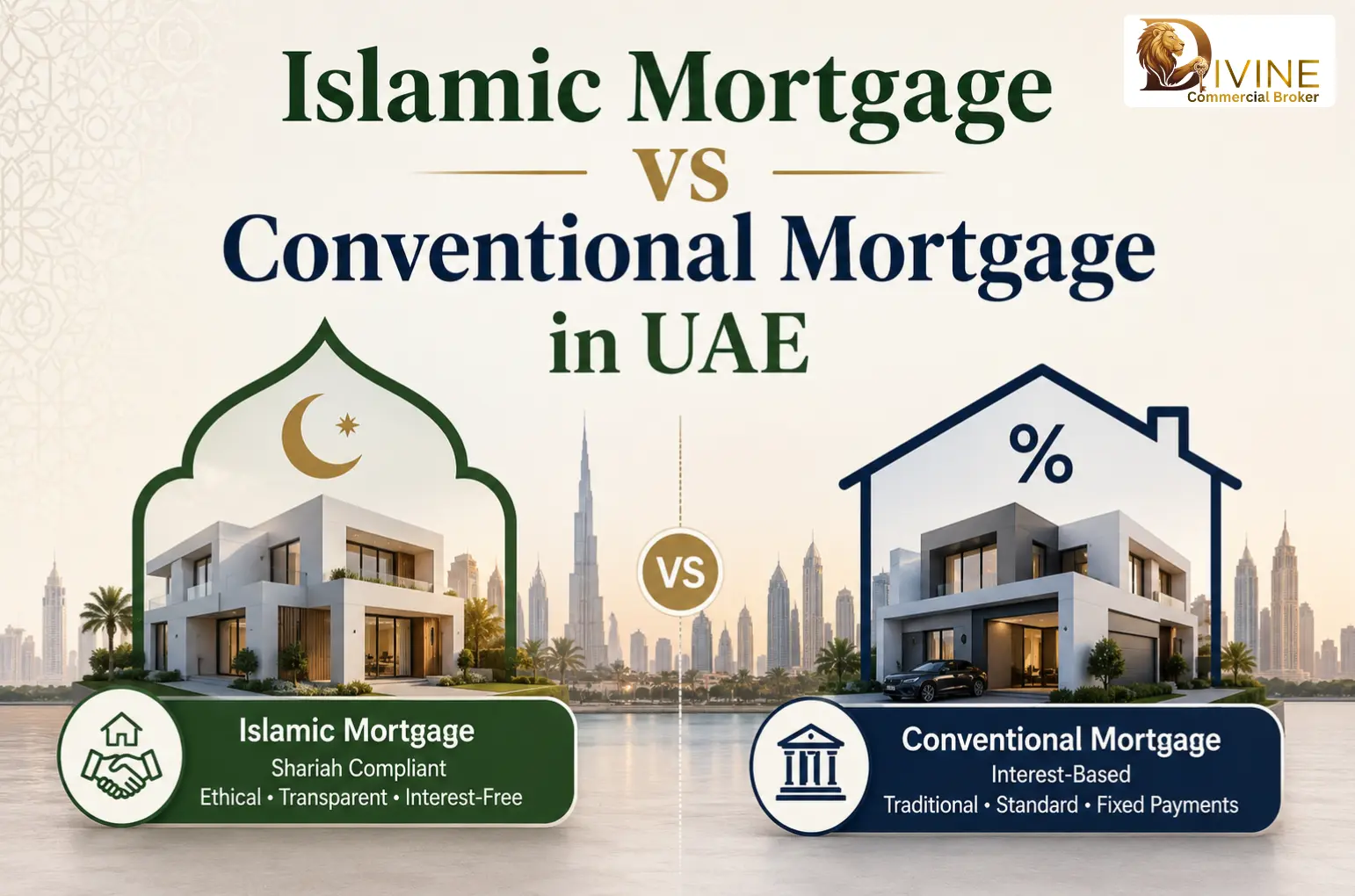
Islamic Mortgage vs Conventional Mortgage in UAE
Islamic Mortgage vs Conventional Mortgage in UAE
So you are ready to buy a home in the UAE. You have done your property search, you have a budget in mind, and now the bank is asking you one big question do you want an Islamic mortgage or a conventional one?
Most people freeze at this point. To be honest, that is reasonable. Although the two products seem similar at first glance; they operate rather differently. Interest is involved in one, but not in the other. One is based on Sharia law; while the other adheres to conventional banking regulations.
What Is an Islamic Mortgage?
An interest free; house loan is known as an Islamic mortgage. Thats the main concept. Interest, or riba, is prohibited in Islam. In order to help customers in purchasing properties while adhering to Sharia law; Islamic banks developed alternative strategie’s. The bank either purchases the property and sells it to you at a profit, or it co-owns the property with you until you repay it, rather than loan you money and charging interest on it.
In the UAE, three primary structures are utilized
Murabaha is the easiest to understand. The bank buys the property and sells it back to you at a higher price. That price difference is the banks profit. You pay it off in monthly instalments over an agreed period.
Diminishing Musharaka works a bit like shared ownership. A portion of the properties; is owned by both you and the bank. You buy a little more of it each month in addition to paying rent on the bank’s portion. Until the property is entirely yours; your ownership increases and the bank’s decreases over time.
Ijara resembles a lease more. You rent the property from the bank, which owns it. Ownership passes to you at the conclusion of the term.
These products are available in the UAE from banks like as Dubai Islamic Bank; Abu Dhabi Islamic Bank; and Emirates Islamic.
What Is a Conventional Mortgage?
A conventional mortgage is what most people think of when they hear the word “loan.” You borrow a sum of money from a bank, buy the property; & then repay that money over time with interest on top.
The interest rate can be fixed for a few years and then move to a variable rate; or it can be variable from the start. Either way; you are paying back more than you borrowed because of that interest.
Conventional house loans are available to both locals and foreigners in the UAE from standard institutions like Emirates NBD, FAB, HSBC UAE, and RAK Bank.
Important Points Between Conventional and Islamic Mortgages
| Feature | Islamic Mortgage | Conventional Mortgage |
| Interest | No interest profit based model | Interest is charged on loan amount |
| Sharia compliance | Yes fully Sharia compliant | No |
| Ownership structure | Shared or bank owned until paid off | You own the property from day one |
| Monthly payments | Fixed profit payments in most cases | Can be fixed or variable |
| Flexibility | Moderate terms are set upfront | Higher more refinancing options |
| Who it suits | Muslim buyers wanting halal finance | Anyone comfortable with interest |
Islamic Mortgage Benefits and Drawbacks
This is the truthful image-
What makes it effective is that there is no interest involved; making it halal and acceptable to Muslim consumers. The profit rate is agreed upfront, so you know exactly what you are paying from day one. There are no nasty surprises if market rates go up, because your payment is locked in. And yes; non Muslims can take this route too if the numbers make sense for them.
What does not work as well Islamic mortgages tend to be less flexible. It can be challenging to refinance or restructure the transaction later. The total amount you repay over the course of the loan may occasionally be marginally more than that of a traditional loan. The product range is also narrower; so you may have fewer lenders to choose from.
Pros and Cons of a Conventional Mortgage
What works well you get more choices. More banks, more products, more room to negotiate. Refinancing is easier, and if your credit profile is strong, you can sometimes lock in a very competitive rate. The structure is simple too borrow; repay done.
What does not work as well interest adds up. Over 20 or 25 years, you will pay back significantly more than you borrowed. If you are on a variable rate and interest rates rise, your monthly payment goes up too. And of course; for Muslim buyers, the interest element is a dealbreaker from a religious standpoint.
Which Choice Is Better for Home Buyers in the United Arab Emirates?
To be honest, it totally depends on your circumstances.
An Islamic mortgage is the best option if you are a Muslim buyer who wishes to adhere to Sharia law. Completely stop. If the traditional option does not fit your values, there is no use comparing rates.
It truly comes down to the numbers if religion is not a concern for you. Obtain estimates from conventional and Islamic lenders. Get the Effective Annual Rate from each person, not simply the monthly payment amount. Determine the total amount you will pay throughout the course of the loan. The profit rate on an Islamic mortgage can occasionally be lower. Sometimes a conventional rate wins. You will not know until you compare properly.
One thing worth knowing both types are regulated by the UAE Central Bank. So from a legal standpoint, you are protected either way.
Conclusion
There is no universally better option here. If halal financing is important to you, an Islamic mortgage is the best option. You have more options and a larger pool of lenders to choose from with a traditional mortgage. The most important thing is to compare actual numbers, ask the correct questions, and take your time making a selection.
The staff at Let’s Divine can guide you through both possibilities without putting any pressure on you if you want assistance determining which house loan genuinely makes sense for your goals and budget. Every day, they assist new investors and purchasers in Dubai and the United Arab Emirates. Visit letsdivine.co to speak with a market expert.
Frequently Asked Questions
Q1. What is an Islamic mortgage in UAE?
It is a home financing product that avoids interest entirely. Instead of charging interest, the bank earns through a profit rate or a shared ownership model. The most common structures in the UAE are Murabaha, Diminishing Musharaka, and Ijara. All are approved by a Sharia supervisory board before being offered to customers.
Q2. What is a conventional mortgage?
It is a standard bank loan where you borrow money, buy a property, and repay the loan with interest over a set number of years. Rates can be fixed; variable, or a combination of both. These loans are widely available from most banks in the UAE.
Q3. What is the main difference between the two?
The biggest difference is interest. A conventional mortgage charges interest on the money you borrow. An Islamic mortgage replaces interest with a profit rate or a co-ownership structure. The monthly payments can look similar; but the underlying mechanism is completely different.
Q4. Is an Islamic mortgage actually halal?
Yes; Every Islamic mortgage product offered in the UAE is reviewed and approved by a dedicated Sharia supervisory board. The structure is specifically designed to avoid riba. So for Muslim buyers, it is a fully halal way to finance a home.
Q5. Which one should I choose?
If Sharia compliance matters to you, go Islamic. If you want maximum flexibility and a wide range of lenders; conventional may suit you better. Either way, compare the Effective Annual Rate across both options before making a final decision the cheapest-looking monthly payment is not always the cheapest loan overall.

Recent Posts
Mortgage in Dubai 2026: Complete Guide for Expats and Residents

Second Property Mortgage in the UAE Rules LTV Limits and Tips for Luxury Investors